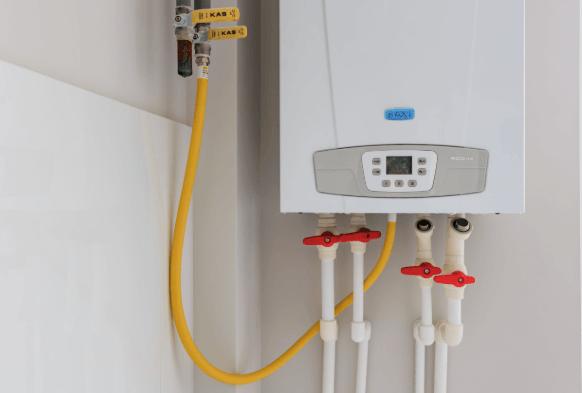
Tankless water heaters heat water on demand, eliminating standby and circulatory losses. They maintain continuous supply with precise temperature control, reducing drops during peak or irregular use. Their compact design enables near-point-of-use installation, improving space efficiency and limiting long piping heat loss. Reliable operation and rapid diagnostics support scalable configurations and proactive maintenance. This combination prompts consideration of how these systems perform under varying loads and multi-family scenarios, inviting a closer look at long-term performance and upgrades.
How Tankless Heaters Cut Energy Use
Tankless water heaters heat water on demand, eliminating the standby heat losses common to storage tanks. Their rapid response minimizes energy waste by supplying only heated water as needed, rather than maintaining a constant reservoir.
This configuration improves energy efficiency and enables standby loss reduction through precise control, reduced circulation, and shorter heat-up cycles, supporting resilient, freedom-oriented energy use.
Never Run Out of Hot Water: Endlessly Helpful
The ability of tankless systems to supply hot water on demand translates into virtually uninterrupted usage for households with high or irregular hot water demand. This mechanism supports endless hotwater delivery during peak cycles, reducing the risk of temperature drops. Efficiency gains stem from on-demand operation, lower standby losses, and precise temperature control, aligning with consumers seeking freedom through reliable, continuous hot water accessibility.
Space-Saving Design for Small Homes
In compact living environments, space efficiency is a key determinant of system feasibility and placement options. Tankless units enable compact installation by mounting near point-of-use or within utility corridors, minimizing footprint and heat loss.
Quiet operation minimizes acoustic intrusion, preserving open-plan environments while enabling scalable configurations for multi-family or micro-housing contexts.
This design optimizes footprint without compromising performance or flexibility.
See also: Technology Fatigue: Are We Overconnected?
Reliability, Longevity, and Smart Upgrades
Reliability and longevity in tankless water heaters hinge on robust component quality, precise heat exchange control, and durable electrical and gas interfaces. The reliability discussion emphasizes consistent activation, fault tolerance, and rapid diagnostics.
The longevity discussion centers on heat exchanger resilience, corrosion resistance, and scalable maintenance access. Smart upgrades enable remote monitoring, software calibration, and predictive service without compromising performance or freedom of operation.
Conclusion
Tankless water heaters offer precise, on-demand heating with reduced standby and circulating losses, enabling scalable, efficient systems for modern homes. Their compact design minimizes pipe heat loss and supports flexible installation near consumption points. Reliability and rapid diagnostics foster proactive maintenance and long-term longevity, while smart upgrades enable tailored performance. Example: a multi-family building retrofits with modular tankless units, cutting annual energy use by 25% and stabilizing hot-water delivery across units, even during peak usage.